UK interior installations firm Dellicompagni unveils a cinema of quietly epic proportions in this Level Three project. HiddenWires steps inside.
When this room’s 11.9.6 system fires to life with the opening explosion of Civil War (2024), an even more striking shift follows. Destruction gives way to stillness, making silence just as expressive as the action itself. And the room housing both story and system is precision-engineered to CEDIA’s RP22 Level Three standards.
Contradicting what we might expect of cinematic performance, company director and installer Tom Dellicompagni explains this room’s power lies in how quiet it can go. “Loudness is the easy part,” he says. “But the quietness of a room requires engineering, soundproofing, and rigorous R&D.”

Dimensions by design
At only six by four metres wide, this cinema sits discreetly in Dellicompagni’s showroom between his office and workshop. With that in mind, it could be seen to wed epic performance to intimate experience. “I wanted this to be a realistic, relatable space that’s still capable of transporting the senses,” he explains. “It’s highly likely my customer base will have similar dimensions to play with in their homes.”
The cinema showcase, a kind of passion-project-meets-business-strategy, was a gradual building exercise. Dellicompagni revised “every little detail” over 12 months, a sign of his infinite curiosity about engineering excellence.
“I had the luxury of space and time on my side,” he says. “The room itself used to be part of the wider workshop, so I could stretch to any width, height and length when building the cinema from the ground up. It also wasn't a normal 40-hour working week as I tinkered with acoustics and fittings.”

This obsessive attention to detail directly informs how Dellicompagni approaches system layout. “I think spending time on details, which can often make or break a system, has huge value,” he insists. “For example, cables and sensors create holes that need to be accounted for. Air loss from the door will impact how the bass performs. Ceiling projectors throw out unwanted heat and noise. In that regard, this space is a vital learning tool allowing me to experiment and understand how these nuances impact immersion.”
“I think spending time on details, which can often make or break a system, has huge value."
For soundproofing, the room has five layers to the walls and ceilings while only two openings for cable entry and air exist outside the door. The room was designed to reach an NCB 17 noise floor and achieved it with the full system running. This includes the projector, ventilation and all active amplifiers, reflecting true operating conditions.
Having established the room’s ability to move from explosive impact to complete stillness, Dellicompagni shows how the system behaves with live material. A concert clip from band Imagine Dragons pares back layers of studio production, delivering the rawness of a live performance without the listener fatigue that typically comes with it.
Why RP22?
RP22 provides a measurable framework for immersive audio design, but it also shapes how rooms are conceived from the ground up. Dellicompagni says: “My deep understanding of RP22 means I can both design and measure with confidence – and with RP32 on the way, we’ll soon have a formal method of verifying RP22 in practice. Years spent in calibration and measurement ensure when I build these rooms, I know they’re delivering the performance I intended.”
He balances his role as a home cinema craftsman with contributions to system verification on CEDIA’s RP32 committee. “RP32 gives me the ability to electronically confirm the system performs exactly as it should,” he says. “It provides a clear framework for self-certifying a reference-level cinema, which is precisely how this project was verified.”
In this home cinema, Dellicompagni translated speaker data and CAD modelling into panels he crafted himself using CNC machinery. Trinnov processing and Primare amplification power the room’s sound system, with Control4 handling system control and integration.
"RP22 puts all relevant existing information in one place and in perspective.”
But Dellicompagni maintains that physical fitout is crucial to true cinematic performance. “I implement a different solution for every room,” he relates. “And it has to be this way. Soundproofing a room largely depends on how the building is constructed, along with elements as arbitrary as a washing machine next door. We must also consider the role of windows, doors, and even natural materials like brick or wood, in locking in the best audiovisual experience.”
RP22 establishes 21 measurable performance parameters including loudness, dynamic range, noise floor and consistency across seats. These guidelines span four performance levels, enabling installers and designers to predict outcomes on paper.
While Levels One and Two are designed to preserve artistic intent with a credible immersive experience, Level Three represents a significant advance. Targeting commercial reference cinema performance, it mandates a higher peak SPL capability and dynamic range as well as a substantially lower background noise floor.

“Room size determines performance levels,” Dellicompagni says. “This is about the smallest room you could do a Level Three cinema in. The next level would rest on the room’s noise floor and, crucially, physical distance from the listeners to the speakers.”
Level Three stipulates strict tolerances for consistency across seats, shifting the focus from achieving loudness to preserving detail. Dellicompagni adds: “RP22 doesn't necessarily bring anything new to the industry, but it does put all relevant existing information in one place and in perspective.”
Seats, subs and speakers
He also emphasises the role of seating layout in delivering immersive audio: “Before I choose a speaker, I know exactly what I need from it based on where the seats are,” he says. “I understand how much sound pressure needs to cover a specific angle and distance before performance begins to drop off-axis. Conversely, seating positions dictate the bass response, which means they determine subwoofer placement.
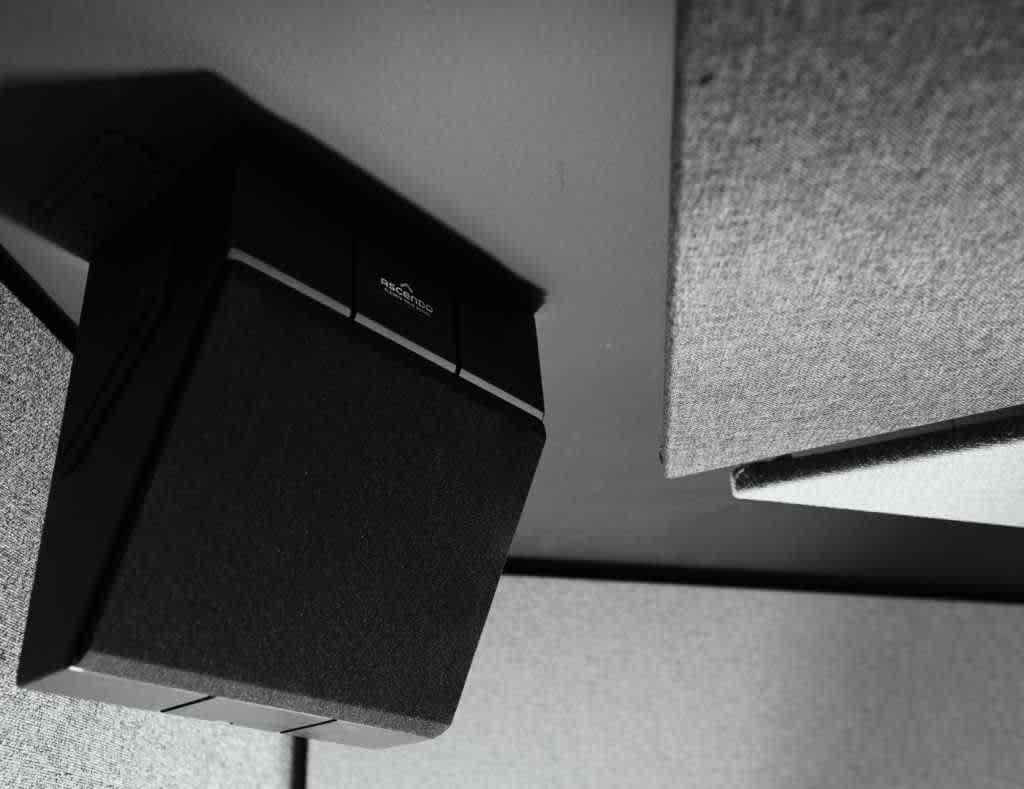
“Think of sound as a cone: knowing how wide and large that cone needs to be ensures consistency across every seat. There shouldn’t be a suboptimal listening position, and that’s where ASCENDO stands out in a very distinctive way.”
Three of the brand’s The12 PROs are used for the LCR channels, with eight The10s for surrounds and six The6 Wedges for Atmos. Eight 18-inch subs and one 24-inch infra complete the speaker system. “ASCENDO’s unique offering is SPL bass,” says Dellicompagni. “But I don't think people realise that founder Geoffrey Heinzel also designed his speakers to behave nicely. Because of their design, coaxial speakers offer excellent time coherence.
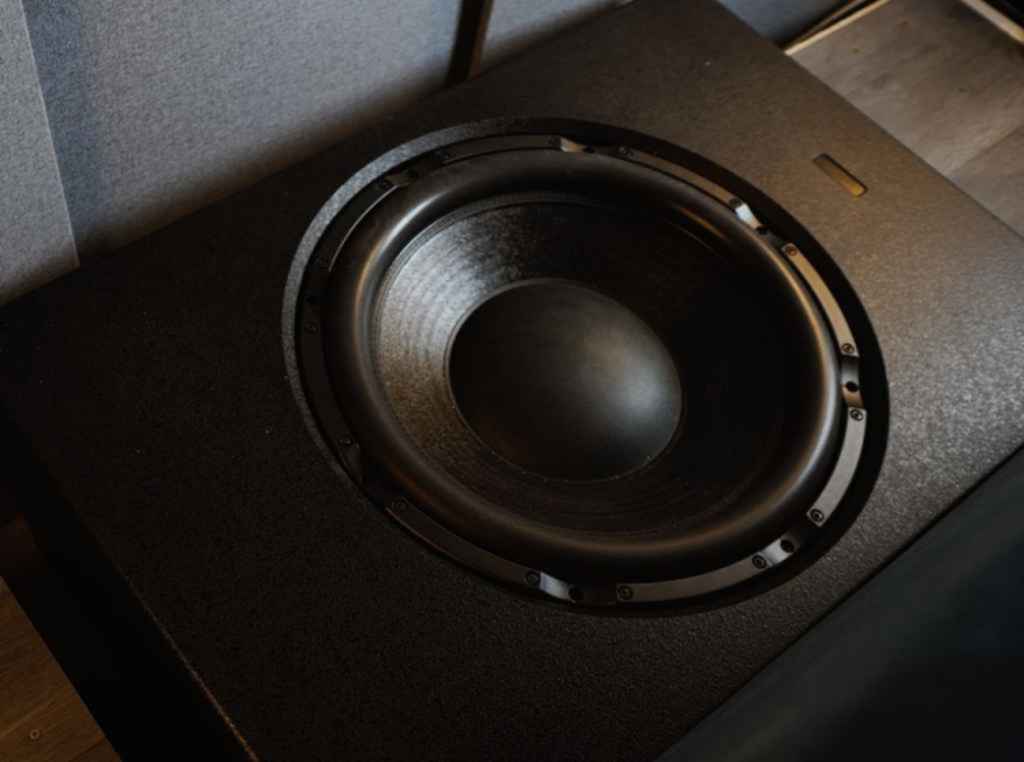
“Additionally, Heinzel provides the engineering data: and I won't use a speaker if I don't have that because I won't know if it's going to fit the bill or not. There's one industry reference of objective speaker data, known colloquially as Spinorama, and it tells us almost everything we need to know about required audio properties.”
Dellicompagni is referring to an online collection of graphs which highlight listening windows, sound power and more for several brand models. A guide to selecting speakers, it pools independent findings and measurements from sources like the Audio Science Review journal, vendors and some scientific papers.
"Spinorama tells us almost everything we need to know about required audio properties.”
“The nerdier we can get about specification, the better,” he says. “If I encounter a company willing to talk technicalities like impedance curves with me, there’s a good chance I’ll visit and get to know its products better.
“I'm very fortunate to have been taken under the wing of some meticulous professionals in home cinema, who have instilled a curiosity in me that drives questions like: how can I get the very best from a speaker? How do I get my centre channel as good as I possibly can? And the answer is always building a good room.
“I draw on my manual skills from my time as a shop-fitter and bridge them with design and mathematics. I coordinate the products with the physics, mapping everything in a 3D space before hand-finishing the components and calibrating the full system in someone’s home. It’s a real gift.”
"I coordinate the products with the physics."
Calibration was a three-day, multi-seat process using eight microphones to monitor performance across the room in real time. First, Dellicompagni aligned SPL and time delays before carrying out bass management and optimisation. He then refined timing and crossover integration (including infra-subwoofer alignment) ahead of final measurements and critical listening to tune the system by ear.
Optics and ambience
Beyond the room’s sonic prowess, studio-quality projection and streaming equipment characterise the visuals. A JVC NZ800 projector deploys proprietary e-shift technology, shifting a pixel by less than halfway in four directions up, down, left and right to double picture resolution from four to 8K.

Elsewhere, a Cinemike edition of the Apple TV 4K, modified especially for high-end AV systems, reduces interference and increases audio resolution. Meanwhile, the Kaleidescape system plays 4K HDR movies with a video bitrate four times higher than typical streaming services and Lumagen video processing offers Dynamic Tone Mapping for HDR Content.
“The nerdier we can get about specification, the better."
“I call this a cinema room, but really it’s just a space for playing back content,” Dellicompagni says. “I’m not sure I like the term ‘cinema room’ because of the limitations it implies: fixed seating layouts, windowless interiors. In this case, it also functions as my office. I work here in complete silence, or choose to have music playing quietly in the background. A home cinema isn’t so different from a living room – and making it work as both is an interesting engineering challenge for me.”
Through ultra-precise design and installation, Dellicompagni has made the epic feel intimate, relatable and emotionally grounded. Bespoke engineering has not only reproduced sound and image, but drawn human senses directly into the storytelling. “Everything I do gets all of me put into it,” he concludes. “This room proves that true immersion isn’t fixed; it’s shaped through tinkering, revision and refinement over time.”
All images courtesy of Dellicompagni
Tech-Spec
ASCENDO’s The12 PROs x3, The10 surrounds x8, The6 Wedges x6, The18 twin passive pro shallow subs x4, The24 infrasonic subwoofer x1 and three DSP4-10K2 amplifiers
Cinema built systems projector screen, 4K material
CineMike Apple TV
Control4 control and automation
JVC NZ800 8K Laser Home Projector
Kaleidascape Strato V Movie Player
Lumagen Radiance Pro 5348 video processor
Panasonic BluRay player
Primare’s three A35.8 amplifiers, powering all main channels
Trinnov Altitude 32-channel audio processor