Layla Laidouci reflects on the interplay between design and automation at this year’s WOW!house in the UK, coloured by global influences and growing integration.
The curtain parts enigmatically to reveal a space that resists easy definition: is it a TV, artwork or window? I say this because, on the opposite wall, another display renders a live sky in vivid blue. Framed by physical window panelling, the illusion is convincing enough to make my eyes search for depth and dimension. But there isn’t any - at least not literally.

This is the Nucleus immersive room by Nucleus AV and Russell Sage Studio, also known as Memorandium: a circular retreat using Crestron control to synchronise light, audio, climate and scent. Layered walls and a curved daybed wrap us in comfort, underneath a ceiling screen resembling a skylight. One of multiple Sony displays in the room, this comes with custom scenes and even a dried meadow hanging installation, building the room's sense of spatial and cognitive suspension.
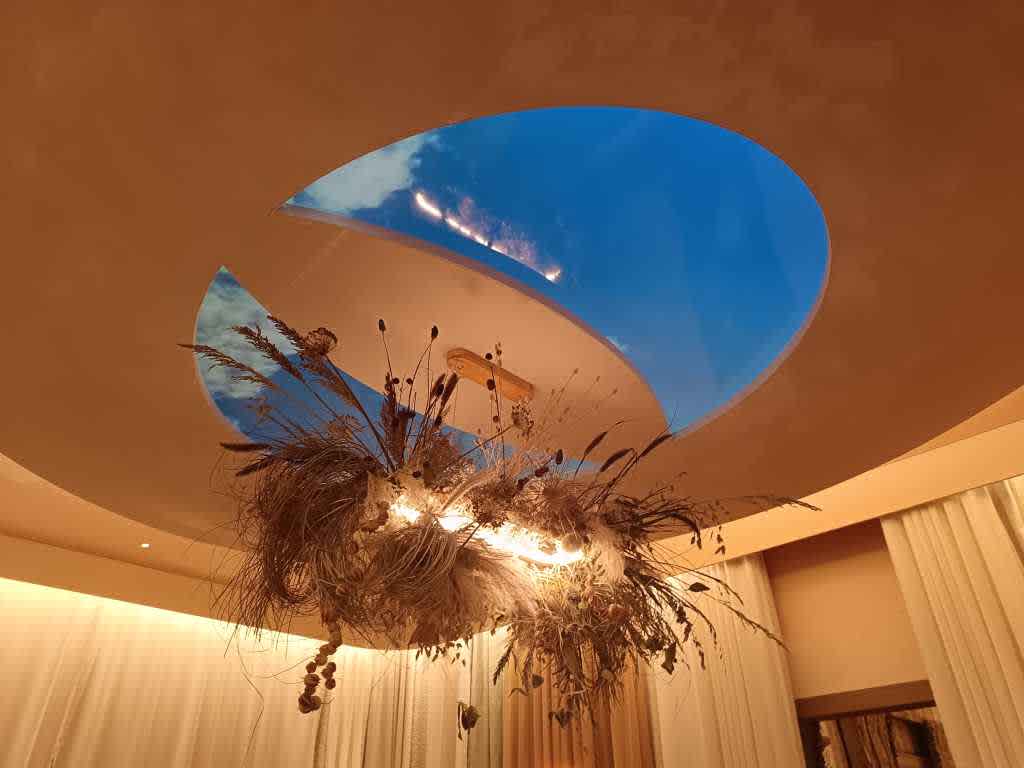
To prove the point, I’m looking at pixels but interpreting atmosphere – and even before I sit, the space feels alive. Integrated lighting both here and throughout the showhouse suggest openness beyond the constraints of architecture. Even the heating and cooling replicate outdoor air, thanks to the use of discreet HVAC integration. And then there is the superb sonic balance at play: L-Acoustics’ HYRISS processor delivers spatial audio across a dazzling spectrum of signatures.
I’m looking at pixels but interpreting atmosphere – and even before I sit, the space feels alive.
During my first demo, the system shifts from cinema performance to concert mode in seconds. It prompts a collective intake of breath among visitors to confirm the technology is exceeding expectations. When Durgesh Sinh of Nucleus switches the room to concert mode, his voice becomes almost visceral: I'm talking crisper sibilance, live reverb and an unexpectedly breathy quality. It goes without saying that Kaleidescape playback, Sonos streaming and Trinnov processing complete the immersive scene.
Beyond the audiovisual system, Jo Malone scents in Bluebell Stem and English Oak play their part in placemaking - as does the very rug we’re standing on. Woven in India from rice straw by a predominantly female workforce, it introduces human geography to high-tech interiors. In many ways, the room embodies the wider WOW!house aesthetic at Chelsea Harbour Design Centre: a building-within-a-building that compresses global design into domestic expression.
Global design
As a UK-based showhouse, WOW!house draws surprisingly on international influences to construct intricately woven narratives. From this perspective, high-end residential design is becoming synonymous with exuberance and escapism on a global scale. Of the 23 curated spaces, more than half draw on geographical themes – from an Italian villa terrace to the Benjamin Moore Minhwa salon. The latter translates to “paintings of the people” in Korean, a folk tradition created by wandering artists between the 17th and 19th centuries.

Other explicit examples of global design include the THG powder room, where a Samsung media wall transports visitors to New York and Parisian skylines, and the Turnell & Gigon Group drawing room layering features like French tassel cornicing and an Afghan kilim rug. On reflection, the showhouse’s international outlook reflects a similar dynamic at work in residential technology: the global exchange of ideas and standards shaping professional definitions of integrated home experiences.

Physical meets digital
Walking through the house, it seems to me that embedded technologies are being treated like just another design material. Ambient lighting appears in every room, layered with physical furnishings to create subtle nuances and narrative drama.
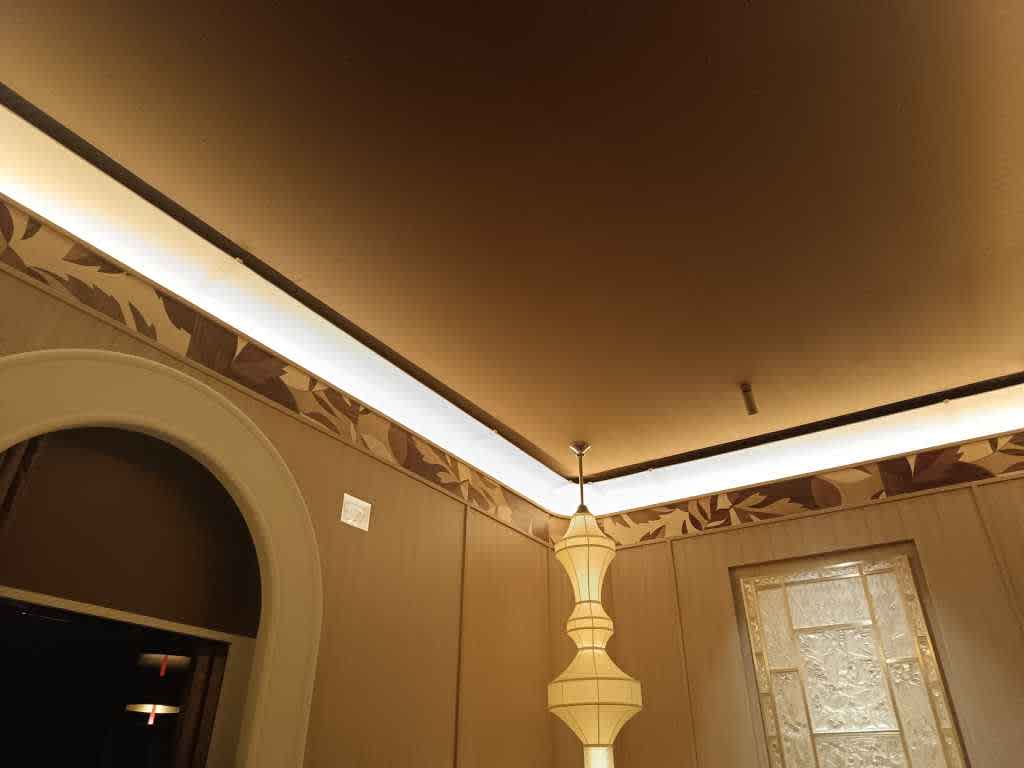
In the parlour by Martin Kemp Design, we see this in what can only be described as fragments: screen-based imagery and anachronistic artwork, accented by bespoke lighting scenes. A play on the French word parler (“to speak”), the room is designed to encourage conversation and reconnection. And, in a rather clever way, its fabric wall panels and sculptural ironwork extend that intention into the physical realm.
Embedded technologies are being treated like just another design material.
Elsewhere, miniature K-array speakers distribute sound from the bookshelves of the Salvesen Graham bedroom, courtesy of integrator Equippd. Their presence reminds us how far architectural audio has come, now supplementing a design landscape where materiality reigns with an exciting ally in its corner: technology.

On a similar note, the “cabinet of curiosities” theme recurs in multiple rooms to reinforce the role of physical trinkets and unusual items in high-end residential design. Like other visitors, I couldn’t help but caress the decorative scroll and ruched lampshades in the Black Edition at Romo speakeasy salon.
In the Martin Moore kitchen and Salvesen Graham primary bedroom, entertainment and control systems are fully integrated into daily rituals. In the kitchen especially, bronze handles and quartzite surfaces join forces with lighting control by Homeplay to adapt "the heart of the home" into a fusion of mood and time.
Entertainment and control systems are fully integrated into daily rituals.
While technology feels conspicuously absent in the analogue interiors of Philip Jeffries morning room, their colour palette also reflects the growing importance of circadian lighting. Blues and greys echo the tones of early morning without visible interfaces, emulating the effects of light with woven wallcoverings, Perspex furniture and tailored upholstery.
So, what questions does WOW!house raise about how we define the home in an age of advancing immersive technology? Based on the spaces shown in Chelsea, automation works at its best when integrated with materials, scents, objects and cultural references. The concepts suggest architecture provides the framework while integration provides the animation, capable of expressing memory and identity.
And in that sense, the modern home is much like a living collection of customs and influences, here gathered from across the world into a brilliant bespoke whole. As such, the industry's challenge may no longer be connecting devices but carving homes into a richer and unmistakeably human experience. Perhaps the next generation of integrated technology will help define how we live and, increasingly, who we are.